The Shadow of Idrimi: The Massacre of Truth
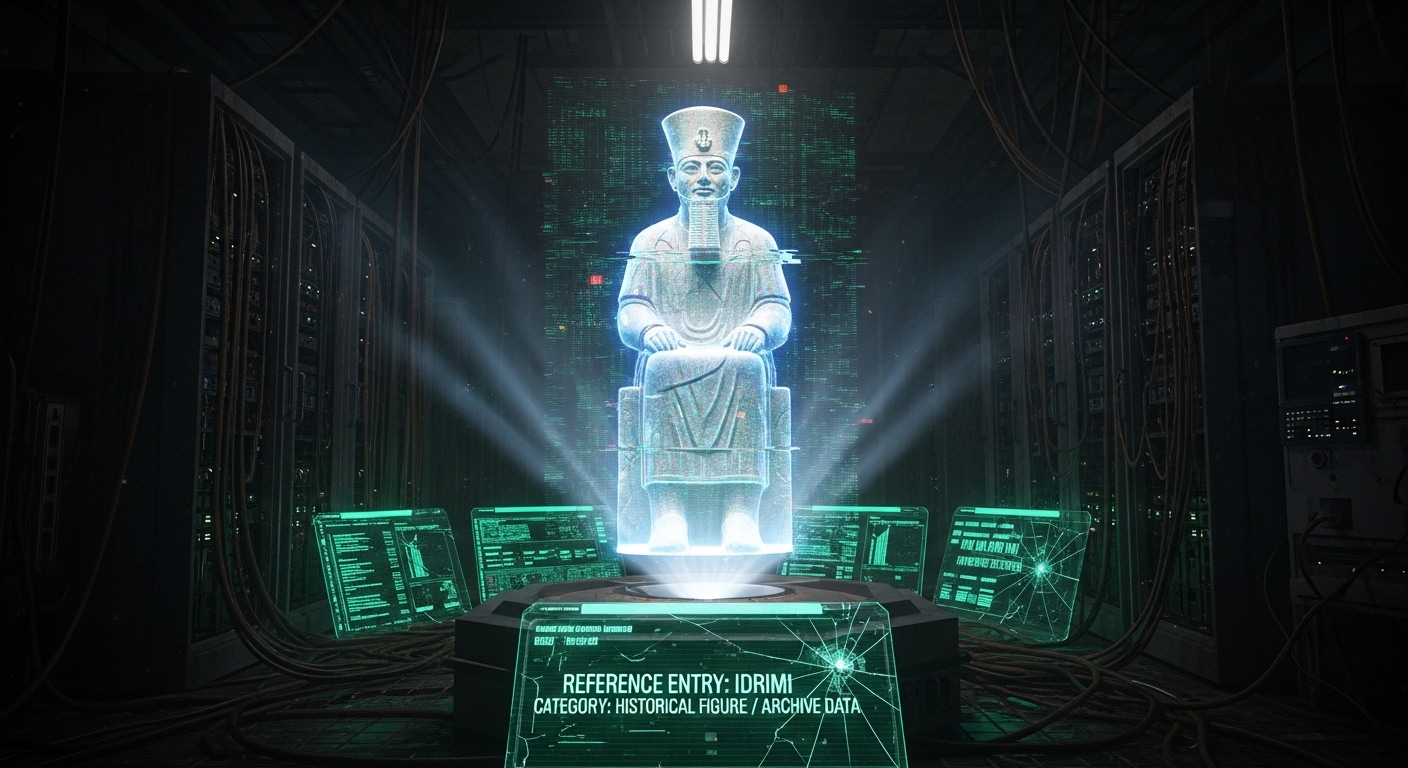
Listen and look upon the man who walked the precipice of kings and ghosts. Long before the names of great ancestors were carved in stone, there was Idrimi—the fallen prince of Alalakh, the king of shadows. His tale is not made of light; it is the most elegant deception woven under the desert sun.
For seven long years, Idrimi lived among the jackals of the Canaanite deserts. There, amidst the scorched dunes, he grasped a cold truth: a man with a sword is merely a target; but a man with a “God” behind him is a master. He looked upon the weary, the broken, and the enslaved groaning under the heavy yoke of the world’s living “God-Kings”; he offered them a phantom. He spoke to them of a King loftier than anyone walking the earth—a King who demanded not gold as tribute, but their entire souls.
In truth, he promised them an immortality like that of the gods, beyond the flesh rotting beneath the soil. Idrimi turned man’s ancient fear of death into a weapon. “Though your body be crushed under the whip, your soul shall walk like kings in the eternal realm of the heavens,” he said. He whispered to the slaves of a dignity they had never tasted in their lives, to be found in those infinite gardens after death. This promise was a mirage offered to a man burning with thirst in the desert; it was so sweet, so grand, that people gladly sacrificed their only reality—their earthly lives—for the sake of this eternal one. By offering them the only thing the gods possessed—”time without end”—he forged for himself a chain of unending loyalty.
Behold the tragedy! Idrimi did not liberate them; he merely shifted their chains from the iron of men to the invisible silk of an idea. He spoke of revelations coming from the burning bush of his own ambition; he claimed the heavens commanded the return of his throne. Blinded by the hope of a savior, the people could not see the architect behind the altar. They followed that “One Truth” only to carry him to a new palace in Alalakh; they never understood that what they thought was salvation was actually a new coronation ceremony.
While humanity burned with the dream of promised heavens, they were, in fact, offering that eternity to their masters with their own hands. As mortal souls mingled with the earth and were forgotten, their unshakable faith and sacrificed lifetimes carved the names of cunning men like Idrimi into the timeless pillars of history as immortal inscriptions. People bestowed that promised infinite life not upon themselves, but upon the tricksters who ruled them like shadows. Their realization of this silent era, this massive exchange, would be as difficult as waking from a sleep that lasted centuries—long enough to soothe the pain of the holy branding iron pressed against their souls.
History is a fickle mirror, my children. You see whichever way you look, but the truth can only be seen by looking in all directions at once. It has confused the face of the king with the face of the saint; it has blended the conqueror with sanctity. They call this a “revelation,” yet it was the first great deception—the moment man learned to be ruled not through the body, but through the soul. Idrimi returned to the city by drawing a sacred veil over the truth. It was a veil behind which lay only a prince’s ambition, while before it, the shadow of God danced.
Kings saw it legitimate to rule by lying to people thereafter… For they understood that a whip only makes the back bleed, but a blessed lie brings the will to its knees. Power was no longer about swinging a sword in the squares, but whispering fables to consciences in secluded corners. Promises took the place of justice, and “things that must be believed” took the place of truth. As the masses turned into extras within the magnificent lie told to them, kings became Gods under this fake sky they engineered. Legitimacy was no longer fed by directness, but by the hunger of the masses for a collective hallucination.
The throngs were transformed into the easiest weapons to manage. Slave owners brought the truth down from the heavens to the earth and imprisoned it within the noise of the crowds. Now, for something to be right, it didn’t need to be “real”; it was enough for enough people to call it “right.” The masters themselves built that massive echo chamber called the “voice of the majority.” The individual’s feeble and clear objection was crushed and drowned under the collective delusion of the masses. Knowledge was no longer a matter of discovery, but a matter of numerical superiority. Within this numerical prison of their own making, the slaves thought themselves free and justified because they conformed to the majority; whereas they were merely parts of that great choir designated by their masters, preparing their own end. Everything the masses said became the new seals of the slave owners.
Can you hear the echo? It is the sound of thousands of generations kneeling before a phantom born from a prince’s exile.